A garden hose splitter saves hours of frustration — no more unscrewing and swapping hoses every time you switch between the sprinkler and the hand nozzle. But with options ranging from $3 plastic Y-connectors to $25 solid brass manifolds, choosing the right splitter matters.
Here is the short answer: for most homeowners, a 2-way brass ball-valve splitter with 3/4” GHT threading is the best all-around choice. It lasts a decade, seals reliably, and costs under $12. Below, we break down every decision factor.
2-Way vs 4-Way Splitters
| Feature | 2-Way Splitter | 4-Way Splitter |
|---|---|---|
| Outlets | 2 | 4 |
| Weight (brass) | 120–180 g | 280–380 g |
| Pressure per outlet (all open) | ~60% of source | ~40% of source |
| Best for | Small gardens, single sprinkler + hand hose | Large yards, drip zones, multiple sprinklers |
| Retail price (brass) | $8–$14 | $14–$25 |
Our factory data: About 70% of OEM orders from Amazon sellers are for 2-way models. The 4-way is growing — up 25% year-over-year — driven by homeowners with automated drip systems.
Material: Brass vs Zinc vs Plastic
| Property | Solid Brass (C36000) | Zinc Alloy (Zamak 3) | ABS Plastic |
|---|---|---|---|
| Lifespan (outdoor) | 8–12 years | 3–6 years | 1–3 years |
| UV resistance | Excellent | Good | Poor — brittle after 2 summers |
| Freeze tolerance | -40°F / -40°C | -20°F / -29°C | Cracks below 20°F / -7°C |
| Thread wear over 5,000 cycles | Minimal | Moderate — cross-threading risk | High — threads strip easily |
| Lead-free option | Yes (NSF 61 / C69300) | No standard grade | Inherently lead-free |
| FOB cost (2-way, 1K MOQ) | $1.80–$2.60 | $1.20–$1.80 | $0.40–$0.70 |
Factory insight: We see a clear trend toward lead-free brass among US and EU buyers. California Proposition 65 and the EU Drinking Water Directive (2020/2184) both restrict lead in water-contact products. If your splitters might be used on potable water lines, lead-free certification is becoming a market requirement.
Ball Valve vs Gate Valve
Ball valves use a quarter-turn lever with a drilled sphere inside. They seal instantly, resist mineral buildup, and operate one-handed. Nearly all premium splitters use ball valves today.
Gate valves use a screw-type knob that requires multiple turns. They are slower, and the rubber seat degrades faster. Gate valves have largely fallen out of favor in the consumer market.
The manufacturing cost difference is only $0.15–$0.25 per unit, but ball valves deliver significantly better review scores. Always specify ball valves when sourcing.
Thread Compatibility: GHT vs BSP
| Standard | Size | Pitch | Markets |
|---|---|---|---|
| GHT (Garden Hose Thread) | 3/4” | 11.5 TPI | USA, Canada, Australia |
| BSP (British Standard Pipe) | 3/4” | 14 TPI | UK, EU, Middle East |
GHT and BSP are not cross-compatible. The thread pitch is different. Attempting to force one into the other damages both components. Always match the thread standard to your target market.
Gaskets and Sealing
Every threaded connection needs a gasket. EPDM rubber is the industry standard — it resists UV, ozone, and temperatures from -40°F to +250°F. We test every gasket batch at 100 psi for 60 seconds. A well-seated 70A durometer EPDM gasket should show zero drip at standard household pressure (40–80 psi).
Flow Rate Impact
Full-bore splitters maintain the same internal diameter as the hose connection (3/4”), minimizing pressure loss. Reduced-bore designs narrow the passage inside the valve body, dropping pressure by 15–25% even with a single outlet open. For pressure-sensitive applications like high-pressure nozzle spray patterns, always specify full-bore ball valves.
Sourcing Checklist
- Configuration: 2-way or 4-way
- Body material: Brass (C36000 or lead-free C69300) / Zinc / ABS
- Valve type: Ball valve, specify full-bore or standard
- Thread: GHT (US/CA/AU) or BSP (EU/UK)
- Gasket: EPDM (standard) or silicone
- Finish: Chrome / Nickel / Raw brass / Powder coat
- Branding: Laser engraving (MOQ 500), pad printing, or custom molding (MOQ 5,000+)
- Packaging: Polybag, blister card, or retail box
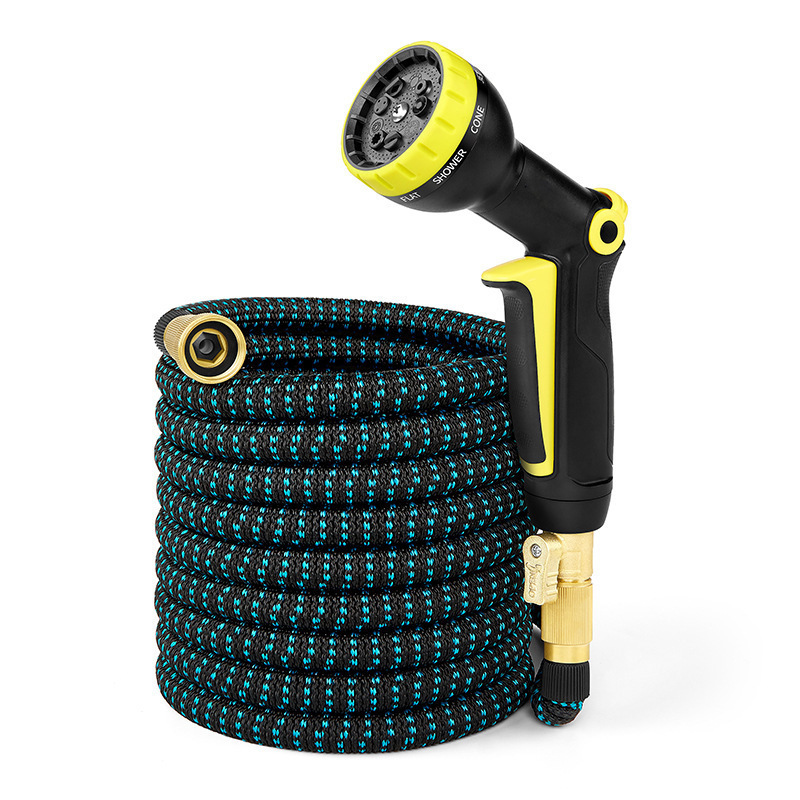
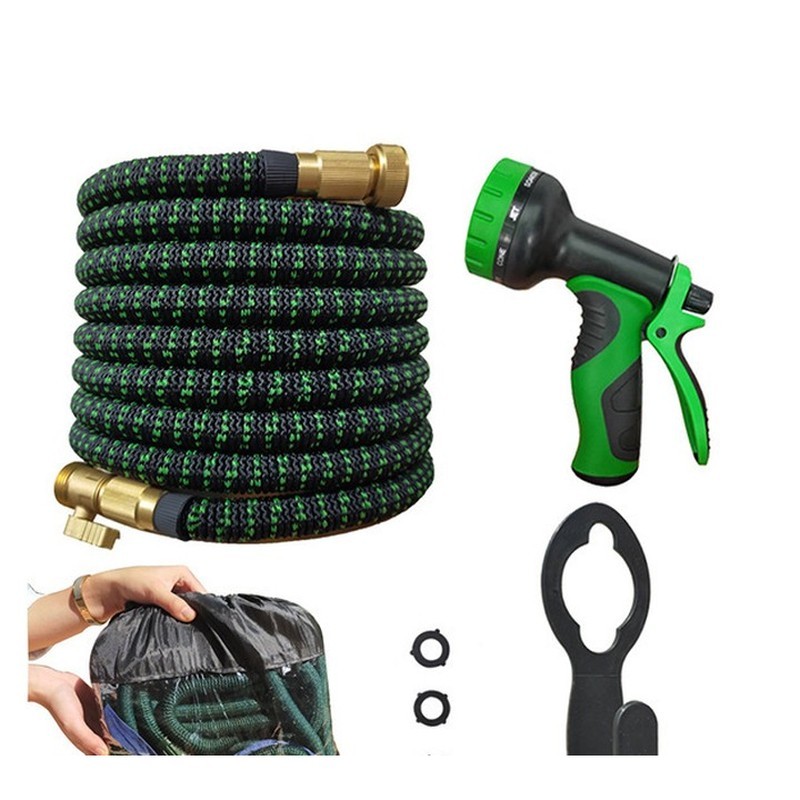
Our standard lead time is 15–25 days for stock models, 25–35 days for custom. Contact our Yongkang factory team for an FOB quotation. We ship splitters alongside nozzles, expandable hoses, and combo sets in mixed containers.
Pair your splitter with the right hose — our expandable hose buying guide and quick connect guide cover everything you need to build a complete garden watering kit.
Looking for a reliable expandable garden hose supplier?
Get a free sample shipped within 5 business days. MOQ from 200 pcs. OEM packaging available.